
✭ Medicinal Plants and Their Treatments: Nature’s Pharmacy
Medicinal plants have been used for thousands of years as natural remedies for a wide variety of health conditions. Ancient systems of medicine such as Ayurveda, Traditional Chinese Medicine, and Unani rely heavily on plant-based treatments. Even today, modern pharmaceuticals often derive their active compounds from plants. The growing interest in natural and holistic healing has brought medicinal plants back into focus as safe and effective alternatives or complements to conventional medicine.
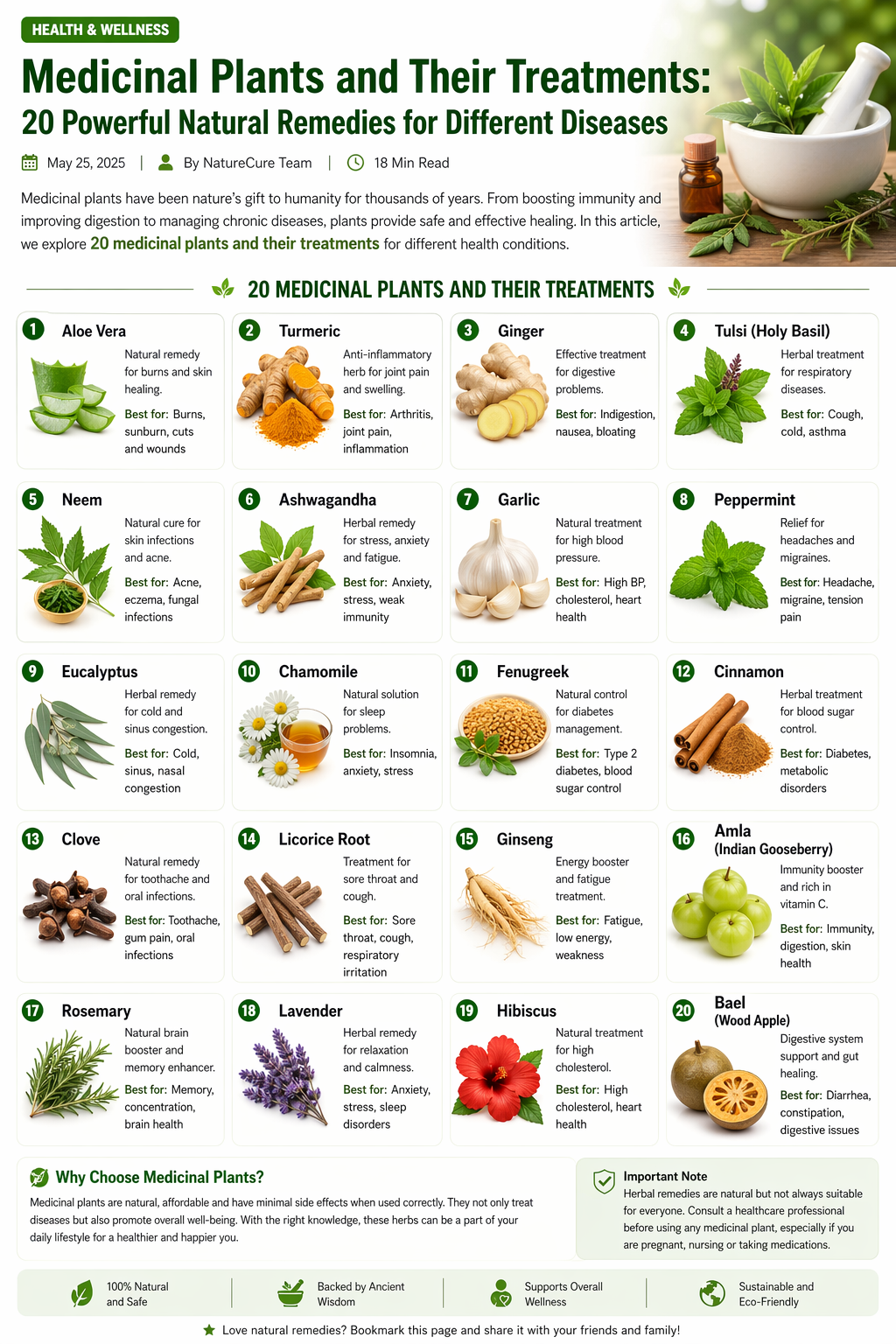
This article explores 20 medicinal plants, each associated with a unique treatment for different diseases or conditions. Understanding these plants not only helps preserve traditional knowledge but also promotes sustainable and natural healthcare practices.
Medicinal plants have been used for centuries as natural treatments for various diseases. From ancient Ayurveda to modern herbal medicine, plants play a crucial role in healing and maintaining health. Today, as people search for safer and more natural alternatives, the importance of medicinal plants is growing rapidly.
In this article, we explore some powerful Medicinal Plants and Their Treatments: Nature’s Pharmacy, each targeting a different disease or health condition. This guide will help you understand how nature provides effective remedies for common health problems.
☆ 1. Aloe Vera – Skin Burns and Wounds
Aloe vera is widely known for its soothing and healing properties. The gel extracted from its leaves is rich in vitamins, enzymes, and antioxidants. It is particularly effective in treating burns, sunburns, and minor wounds. Aloe vera accelerates skin regeneration and reduces inflammation, making it a natural remedy for skin damage. Aloe vera is one of the most widely used medicinal plants for skin care. Its gel contains vitamins, enzymes, and antioxidants that help in healing burns, sunburns, and minor wounds.
How it works:
Aloe vera soothes inflammation, promotes collagen production, and speeds up skin repair.
Best for:
- Minor cuts and wounds
- Burns
- Sunburn
☆ 2. Turmeric – Inflammation and Joint Pain
Turmeric contains curcumin, a powerful anti-inflammatory and antioxidant compound. It is commonly used to treat arthritis and joint pain. Regular consumption of turmeric helps reduce swelling, stiffness, and discomfort in joints. It is also beneficial for improving overall immune health. Turmeric is a powerful medicinal plant known for its active compound, curcumin. It has strong anti-inflammatory and antioxidant properties.
How it works:
Curcumin reduces inflammation and protects joints from damage.
Best for:
- Arthritis
- Joint pain
- Inflammation
☆ 3. Ginger – Digestive Disorders
Ginger is highly effective in treating digestive issues such as nausea, indigestion, and bloating. It stimulates digestive enzymes and improves gut motility. Ginger tea is a popular remedy for motion sickness and morning sickness during pregnancy. Ginger is a well-known herbal remedy for digestive disorders such as nausea and bloating.
How it works:
It stimulates digestive enzymes and improves gut movement.
Best for:
- Indigestion
- Nausea
- Motion sickness
4. Tulsi (Holy Basil) – Respiratory Problems
Tulsi is considered a sacred plant in many cultures and is known for its medicinal properties. It is used to treat respiratory conditions such as cough, cold, asthma, and bronchitis. Tulsi leaves help clear mucus, improve lung function, and boost immunity. Tulsi is a key plant in Ayurvedic medicine used for respiratory health.
How it works:
It helps clear mucus, reduces inflammation, and boosts immunity.
Best for:
- Cough
- Cold
- Asthma
☆ 5. Neem – Skin Infections
Neem is a powerful antibacterial and antifungal plant. It is commonly used to treat skin infections such as acne, eczema, and fungal infections. Neem leaves and oil help cleanse the blood and detoxify the body, promoting healthy skin. Neem is known for its antibacterial and antifungal properties.
How it works:
It purifies the blood and fights bacteria causing skin problems.
Best for:
- Acne
- Eczema
- Fungal infections
☆ 6. Ashwagandha – Stress and Anxiety
Ashwagandha is an adaptogenic herb that helps the body cope with stress. It reduces cortisol levels and improves mental clarity. It is widely used to treat anxiety, depression, and fatigue. Regular use enhances overall mental well-being. Ashwagandha is an adaptogenic herb that helps the body manage stress.
How it works:
It lowers cortisol levels and improves mental balance.
Best for:
- Anxiety
- Stress
- Fatigue
☆ 7. Garlic – High Blood Pressure
Garlic is known for its cardiovascular benefits. It helps reduce blood pressure by relaxing blood vessels and improving circulation. Garlic also lowers cholesterol levels and reduces the risk of heart disease. Garlic is widely used for heart health.
How it works:
It relaxes blood vessels and improves circulation.
Best for:
- High blood pressure
- Heart disease
- Cholesterol
☆ 8. Peppermint – Headaches and Migraines
Peppermint has a cooling effect that helps relieve headaches and migraines. The menthol in peppermint improves blood flow and relaxes muscles. Peppermint oil applied to the temples can provide quick relief from tension headaches. Peppermint is known for its cooling and soothing effect.
How it works:
Menthol improves blood flow and relaxes muscles.
Best for:
- Headaches
- Migraines
- Tension pain
☆ 9. Eucalyptus – Cold and Sinus Congestion
Eucalyptus leaves and oil are effective in treating respiratory congestion. The vapor from eucalyptus helps clear nasal passages and reduce sinus pressure. It is commonly used in steam inhalation for colds and flu. Eucalyptus is commonly used in steam therapy.
How it works:
It clears nasal congestion and improves breathing.
Best for:
- Cold
- Sinus infection
- Nasal congestion
☆ 10. Chamomile – Sleep Disorders
Chamomile is a calming herb that promotes relaxation and better sleep. It is commonly consumed as tea to treat insomnia and anxiety. Chamomile also helps soothe the nervous system and improve sleep quality. Chamomile is a calming herb often consumed as tea.
How it works:
It relaxes the nervous system and promotes better sleep.
Best for:
- Insomnia
- Anxiety
- Stress
☆ 11. Fenugreek – Diabetes Management
Fenugreek seeds help regulate blood sugar levels. They improve insulin sensitivity and slow down the absorption of carbohydrates. Regular consumption of fenugreek can be beneficial for managing type 2 diabetes. Fenugreek seeds help regulate blood sugar levels.
How it works:
They slow carbohydrate absorption and improve insulin response.
Best for:
- Type 2 diabetes
- Blood sugar control
☆ 12. Cinnamon – Blood Sugar Control
Cinnamon is another plant known for its ability to control blood sugar levels. It enhances insulin function and reduces glucose levels in the blood. It is often used as a natural remedy for diabetes and metabolic disorders. Cinnamon is another powerful herb for managing glucose levels.
How it works:
It enhances insulin function.
Best for:
- Diabetes
- Metabolic disorders
☆ 13. Clove – Toothache and Oral Health
Clove is widely used in dental care due to its analgesic and antibacterial properties. Clove oil is effective in relieving toothache and gum pain. It also helps prevent infections and maintain oral hygiene. Clove is widely used in dental care.
How it works:
It contains eugenol, which acts as a natural pain reliever.
Best for:
- Toothache
- Gum pain
- Oral infections
☆ 14. Licorice Root – Sore Throat
Licorice root has soothing properties that help relieve sore throat and cough. It reduces inflammation and irritation in the throat. Licorice tea is commonly used for respiratory and throat infections. Licorice root is a soothing herb for throat problems.
How it works:
It reduces inflammation and irritation.
Best for:
- Sore throat
- Cough
- Respiratory irritation
☆ 15. Ginseng – Energy and Fatigue
Ginseng is known for its ability to boost energy levels and reduce fatigue. It improves physical stamina and mental performance. Ginseng is often used as a natural tonic to enhance vitality and endurance. Ginseng is known for increasing energy and stamina.
How it works:
It enhances physical and mental performance.
Best for:
- Fatigue
- Low energy
- Weakness
☆ 16. Amla (Indian Gooseberry) – Immunity Boost
Amla is rich in vitamin C and antioxidants. It strengthens the immune system and helps fight infections. Amla also improves digestion, skin health, and hair growth. Amla is rich in vitamin C and antioxidants.
How it works:
It strengthens immunity and fights infections.
Best for:
- Weak immunity
- Digestive health
- Skin health
☆ 17. Rosemary – Memory and Brain Function
Rosemary is known for enhancing memory and cognitive function. It improves blood circulation to the brain and boosts concentration. Rosemary oil is often used in aromatherapy for mental clarity. Rosemary is known for improving memory and focus.
How it works:
It increases blood circulation to the brain.
Best for:
- Memory
- Concentration
- Brain health
☆ 18. Lavender – Anxiety and Relaxation
Lavender is widely used for its calming and relaxing effects. It helps reduce anxiety, stress, and nervous tension. Lavender oil is commonly used in aromatherapy to promote relaxation and improve sleep. Lavender is widely used in aromatherapy.
How it works:
It calms the nervous system.
Best for:
- Anxiety
- Stress
- Sleep disorders
☆ 19. Hibiscus – High Cholesterol
Hibiscus tea is effective in lowering cholesterol levels. It contains antioxidants that help reduce bad cholesterol (LDL) and improve heart health. It also supports liver function and overall cardiovascular health. Hibiscus tea supports heart health.
How it works:
It reduces bad cholesterol (LDL).
Best for:
- High cholesterol
- Heart health
☆ 20. Bael (Wood Apple) – Digestive Health
Bael fruit is highly beneficial for digestive disorders such as diarrhea and constipation. It strengthens the digestive system and improves bowel movement. Bael juice is commonly used in traditional medicine for gut health. Bael fruit is highly beneficial for gut health.
How it works:
It improves bowel movement and digestion.
Best for:
- Diarrhea
- Constipation
- Digestive issues
✭ Conclusion
Medicinal plants offer a natural, effective, and sustainable approach to healthcare. Each plant discussed in this article has unique properties that target specific health conditions, from skin disorders and respiratory problems to mental health and chronic diseases. While these remedies are generally safe, it is important to use them responsibly and consult healthcare professionals when necessary, especially for serious conditions.
The revival of interest in herbal medicine highlights the importance of preserving traditional knowledge and integrating it with modern science. By understanding and utilizing medicinal plants, we can move toward a healthier and more balanced lifestyle that respects both nature and human well-being.
Medicinal plants are a powerful source of natural healing. They provide effective treatments for various diseases without harmful side effects when used properly. As more people shift toward natural health solutions, herbal remedies continue to gain importance in modern life.
However, it is always advisable to consult a healthcare professional before using any herbal treatment, especially for serious medical conditions.